
Hyperbolic Deck Chamber · 2026
A deck builder that reads the meta
A Riftbound constructed chamber: format-aware building, a shared role map, and analysis that never calls the match — live for players, not just a card list.
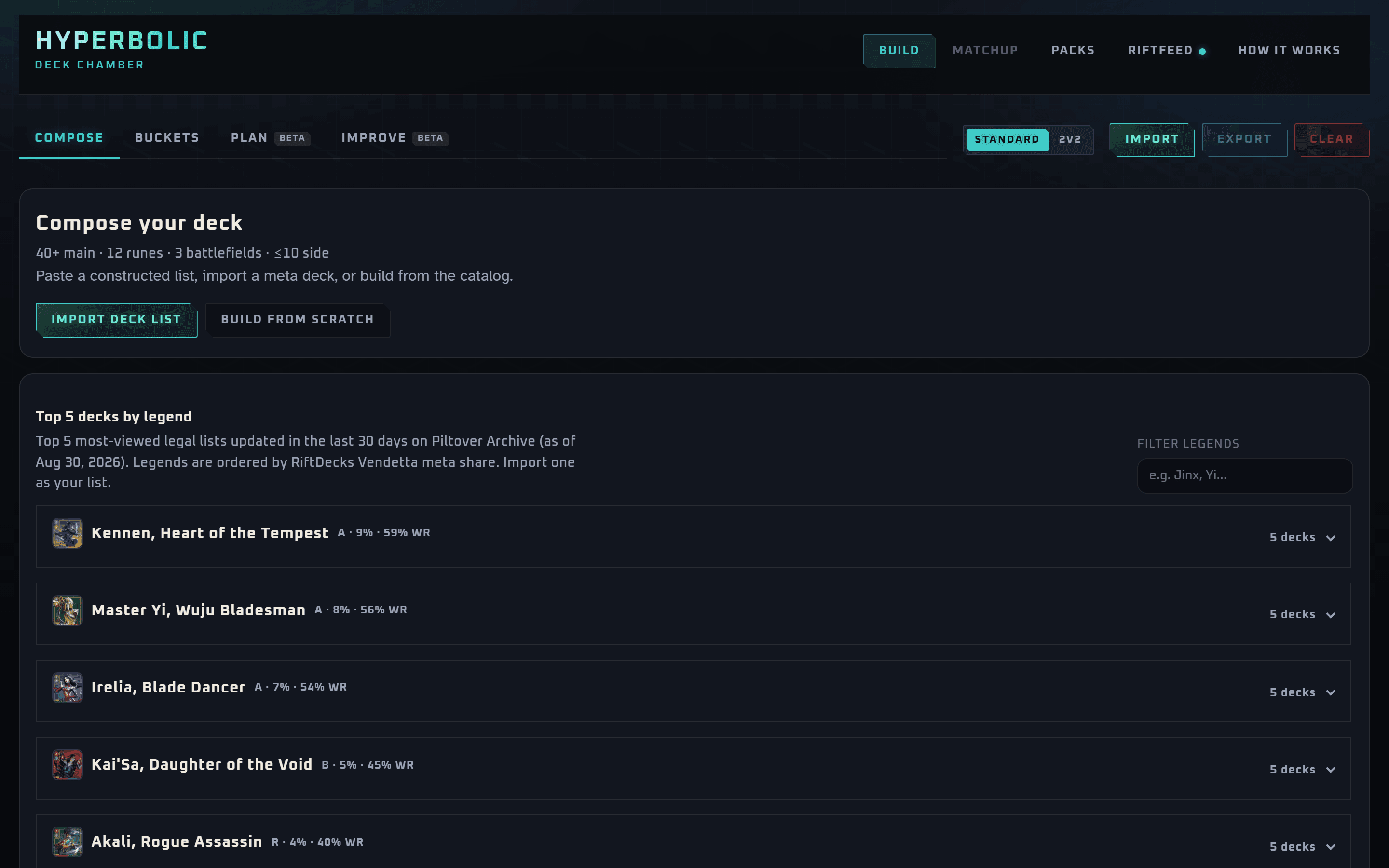
The problem
Players had list editors. They did not have a chamber that understood Riftbound’s constructed rules, clustered decks into archetypes, or simulated what a pack actually does to a collection.
What we did
- 01
Built a format-aware composer — 40+ main, 12 runes, 3 battlefields, sideboard — with import, export, and meta-deck intake.
- 02
Added bucket and archetype analysis so lists can be compared against the field, not just counted.
- 03
Shipped pack-opening simulation plus Plan and Improve beta tools for iterating a list after you open.
Inside the engine
The chamber does not call the match. It maps whether plan pieces arrive on time, and how that lines up against another list.
- 01
Auto-tag
Cards get jobs — Interaction, Haste, Draw — not a keyword dump. One role map feeds everything. Players can override it in Build → Plan → Roles.
- 02
Consistency
Overall is Fit (list shape vs Aggro, Midrange, or Control) plus Execution (pieces on time). Forty-five percent Fit, fifty-five percent Execution.
- 03
Buckets
Named interchangeable piles for draw odds: exact, multi-condition, or simulate. Still hand odds, not match win rate.
- 04
Improve
Cut and add against the weakest Execution checkpoints. Domain-legal, copy-limited. Not match EV.
- 05
Matchup
Named axes: early board, tricks, engines vs hate, curve race. Coverage bands, not a win predictor. Observed RiftDecks stats sit beside the model.
Shared draw model: main deck minus Chosen Champion, open four, ship two, energy-only curve, hypergeometric. It does not simulate points, showdowns, or a full game tree.
The chamber
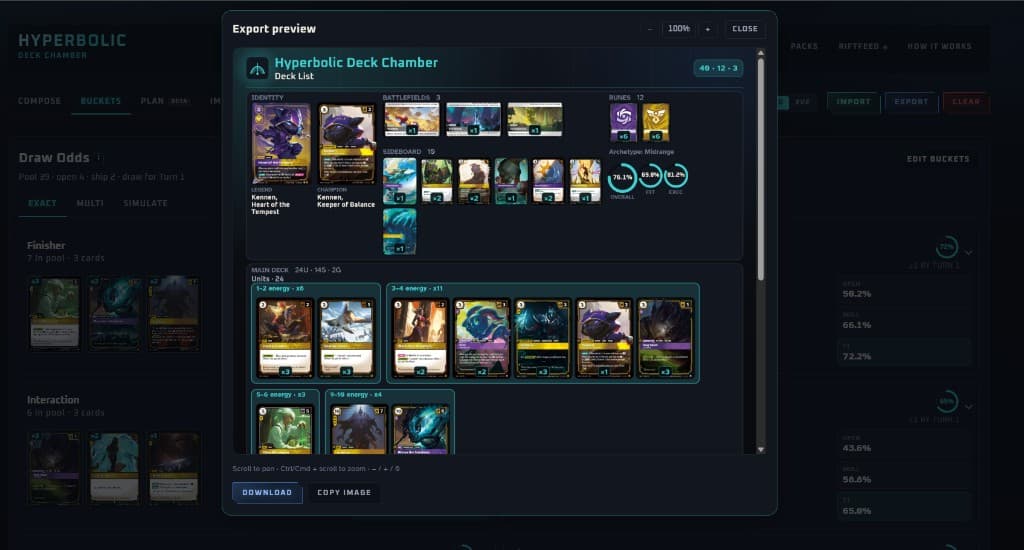
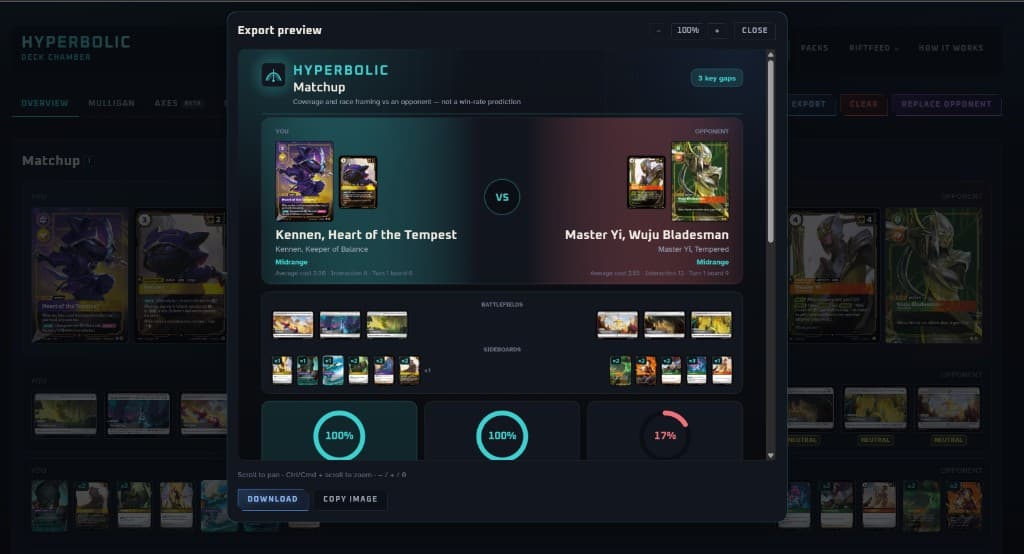
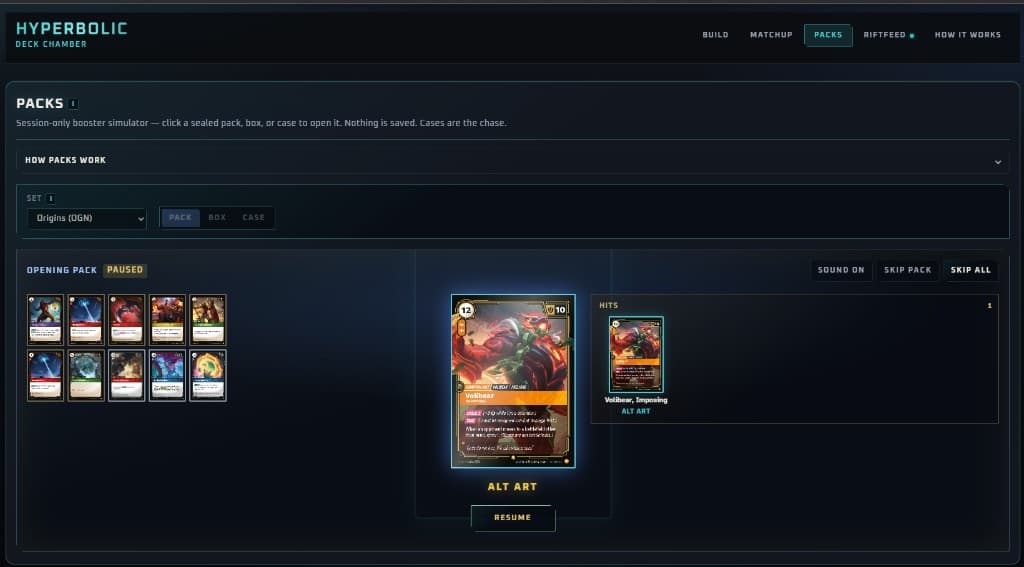

Outcome
A live tool that players actually use — import a list, compare against the meta, and iterate without spreadsheets. Built as a reference for what a custom web app can do.